
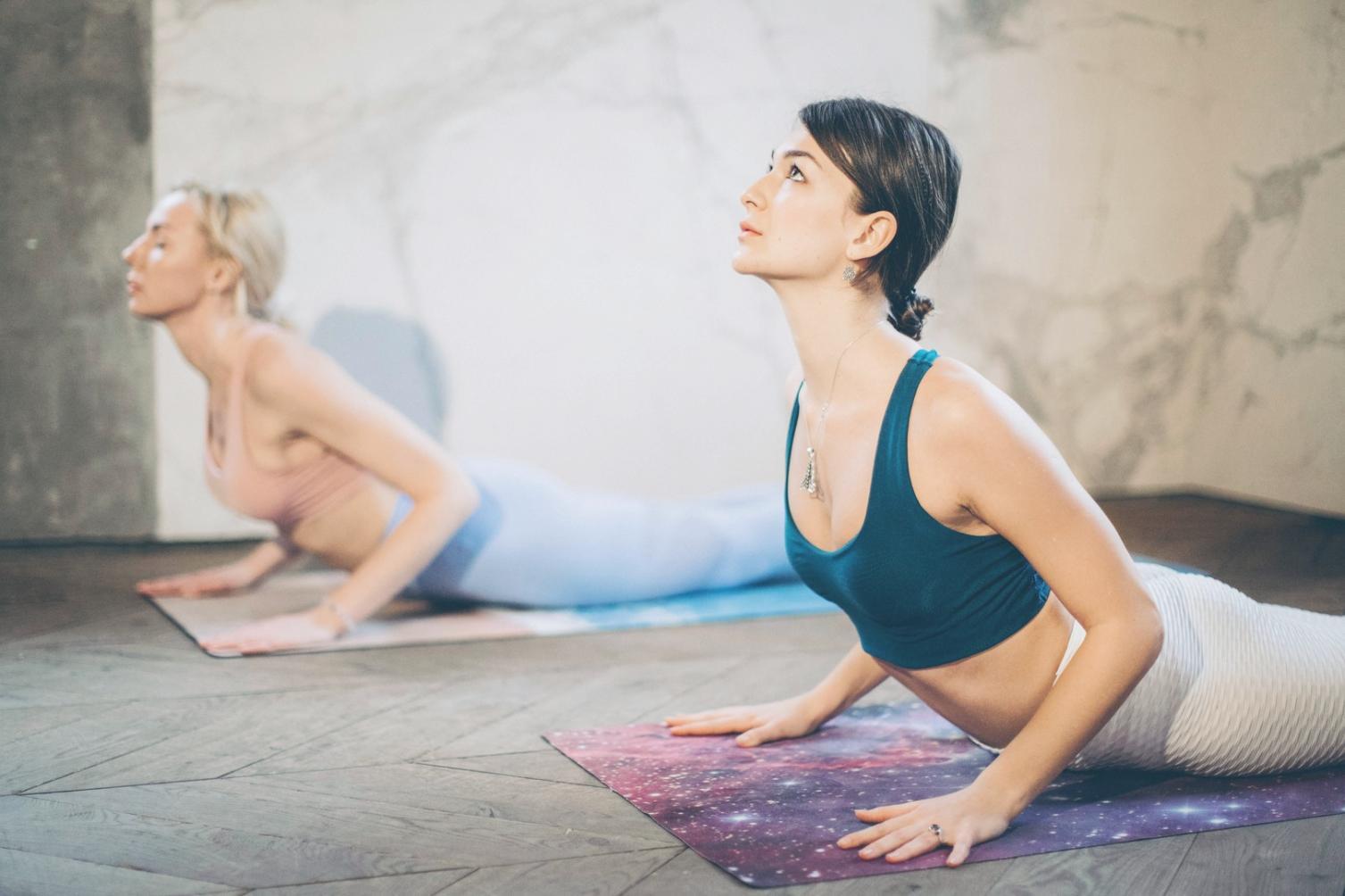
redacpv — group yoga practice online
Stress lives
in the body. So does relief.
A structured group practice for people whose tension has outlasted every breathing exercise they've tried alone.
How sessions workThe part nobody says out loud
Most people arrive here after months of managing stress by themselves — and wondering why it keeps returning.
72% of participants report stronger consistency in a group format versus working alone.
The objection we hear most often: "I already know yoga. I've done the apps. I don't need a group." That's a reasonable position — until you notice that knowing something and actually integrating it into a body under pressure are two different things.
Stress-relief yoga practiced in isolation tends to plateau. The nervous system relaxes when it feels safe, and safety is partly social. A group provides a shared rhythm that solo practice simply cannot replicate — not because of motivation, but because of how the body reads its environment.
This isn't a claim about willpower. It's about the mechanics of how tension releases. The group format isn't a workaround — it's the actual mechanism.
After a few weeks, what shifts
Not a transformation — a gradual recalibration of how the body handles pressure.
Sleep quality changes first
The nervous system downshifts more readily. Participants typically notice this within the first 3–4 sessions, before anything else feels different.
Reactivity slows down
The gap between stimulus and response widens. That's not patience — it's a physiological change that regular practice produces over time.

Physical tension patterns become visible
Most people carry chronic tension in places they've stopped noticing. Group practice, guided by a facilitator, surfaces these patterns in ways solo work rarely does — partly because others in the group are working through similar ones.
Recognising a pattern is not the same as resolving it, but it's the prerequisite.
Situations this was built for
The range of people who show up is narrower than it looks. The circumstances differ; the underlying dynamic — accumulated stress that hasn't discharged — tends to be the same.
- Sustained work pressure with no clear endpoint
- Physical tension that persists after rest
- Difficulty switching off after a working day
- Anxiety that doesn't have an obvious source
- Recovery from a period of burnout
- Wanting structure without a competitive environment
- Previous yoga experience that stalled
- Preference for a group over one-to-one sessions
This is not a beginner-only programme. Participants arrive with varying backgrounds and the sessions are structured to work across that range.
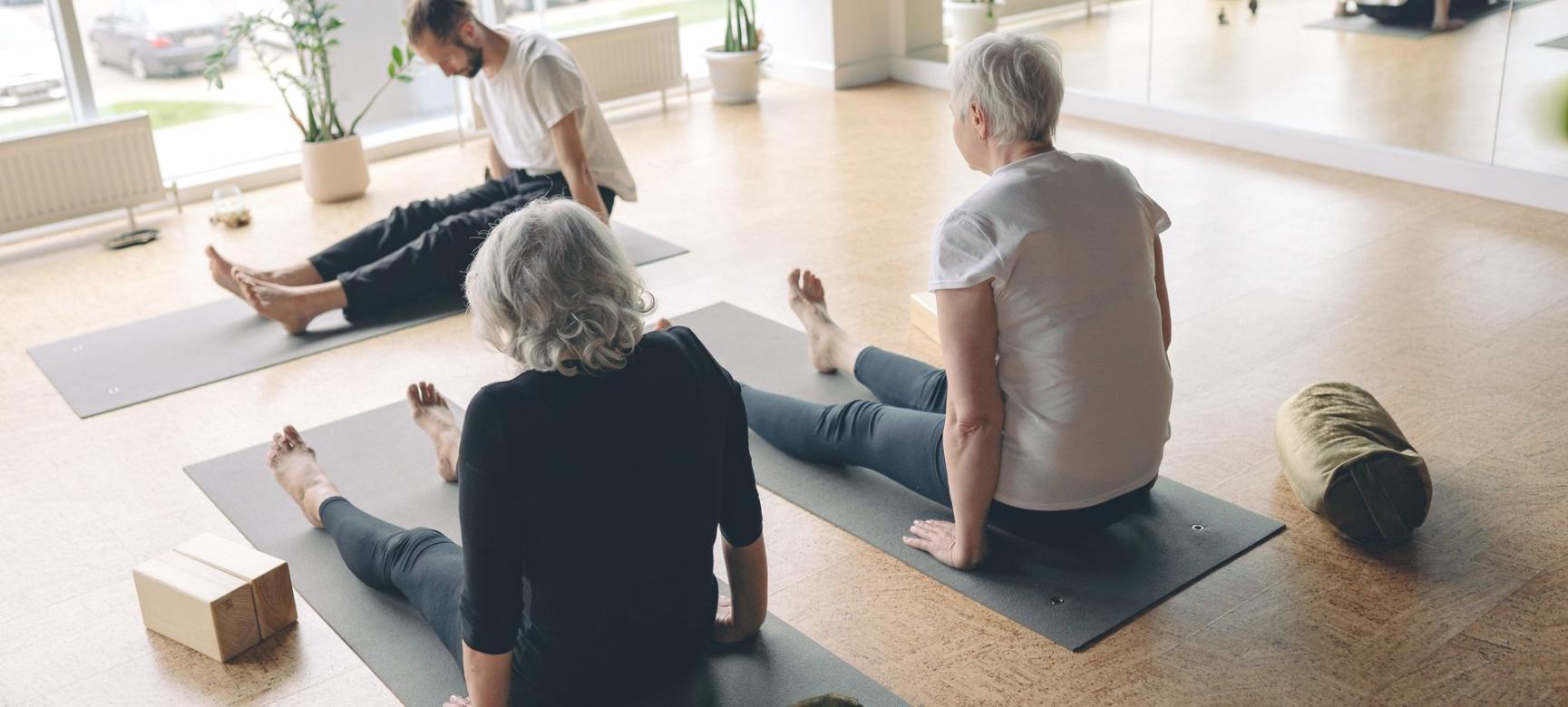
Sessions run online, accessible from any region, with consistent facilitation across all groups.
What consistency looks like across groups
These accounts come from participants in different cohorts, working through different circumstances. The pattern that repeats is the one worth noting.

"I'd done yoga on and off for years. The difference here was that I couldn't skip — not because of accountability, but because the group had a rhythm I didn't want to break. Three months in, my sleep is noticeably steadier."

Tariq Mansouri
Participant, evening cohort
"I came in sceptical about online group sessions. What I didn't expect was how much the shared pace mattered. My shoulders stopped hurting by week six — which I'd been trying to fix for two years with other approaches."

Dmitri Voloshyn
Participant, morning cohort
First session — orientation and baseline
Weeks 2–4 — establishing group rhythm
Weeks 5–8 — deepening practice
Ongoing — participant-led integration